




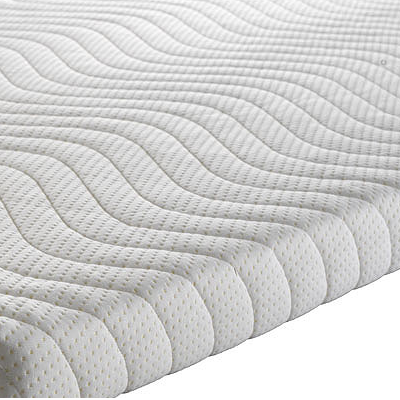
 There are a number of fabric choices and brands that you will encounter during your journey to find your new mattress. Materials ranging from heat-reducing to space age infrared materials claiming to disperse heat elsewhere. This is in part due to the issue that some people find Memory foam gets warm during the night. There will be a big push to pay extra for branded materials to try and reduce this heat issue such as Coolmax and Outlast fabrics. What we aim to do is give you more detail about the role of fabrics in mattress covers so you can decide whether paying extra really is worth it.
Mattress covers serve two main purposes.
1. Comfort - the cover is used as a comfort layer to prevent a sleeper from sleeping directly on top of foam. Memory foam mattresses usually have a zip on cover that can be removed, unlike traditional pocket sprung mattresses that have a permanent cover which houses the fillings, spring units and toppings. If you didn’t have the cover you would be sleeping directly on top of the foam which has a somewhat rubbery feel to it, like using a foam cushion without a cover on a sofa would feel slightly odd. The cover helps give the mattress a soft and smooth feel.
2. Protection – they are there to protect the mattress from wear, tear, perspiration, stains and other marks. The fabric cover directly takes the strain that a sleeper may throw at it and not the surface of the foam itself. We must stress though that this protection is a last form of defense; ideally a mattress protector on top of your topper should be used to prevent damage to the mattress and topper. Given that mattress protection is not the fabrics primary purpose we would recommend you focus your criteria on the comfort factor.
GSM & Fabric Types: The depth and grams per square meter (GSM) of the fabric will enable you to assess its quality and density. Opting for a higher GSM fabric usually results in a thicker and higher quality fabric than a lower GSM count. Quite simply there is more of the fabrics material in each square meter the higher the GSM. We recommend that to ensure a fabric is adding value to the comfort of the mattress that 400g plus is the best GSM to ensure the fabric is providing you with additional comfort. Lower GSMs such as 200g will soon flatten and will soon stop providing that additional comfort layer. 200g more often than not feels thin and is slightly transparent. So when out looking at mattresses in retail stores a quick unzip of the mattress cover will enable you to feel the depth and quality. You can always ask the store, though most time they probably wont even know the GSM!
Whilst mattress covers can come in a whole range of materials from cotton, cashmere, Latex and wool, the majority of Memory foam covers are polyester based. Now you may wonder why such a simple synthetic fiber is used so lets review the properties of polyester.
Polyester has a number of benefits:
- Incredibly durable and strong
- Can be dry cleaned and machine washed at high temperatures without shrinking or warping.
- Quick drying and moisture repelling
- Returns to its original shape very quickly
Natural fibers are usually the preferred choice in the mattress industry and a high quality mattress can often be seen to contain high GSM natural components. In the world of foam beds though this is not necessarily true or advised. Since the mattress cover is sitting over foam and then covered by your bed sheets the requirement for natural materials is somewhat unnecessary. We believe you are better spending the additional money on natural sheets and bedding which direct contact with the sleeper rather than the mattress cover.
In traditional mattresses natural materials are always preferable because the construction method of traditional mattresses relies on these fillings to form part of the core mattress. They form layers above the pocket springs and help keep the mattress plush, breathable and keep its shape. In Memory, Hybrid and Latex mattresses you are not relying on fabrics to give the core mattress stability or shape. The foam itself provides you with the support and comfort and the fabric cover does not play as heavy a role. So why spend over the odds for a natural cover when you won’t necessarily see the benefits?
Is the natural fabric really fully natural? A number of retailers will claim that covers are cotton or cashmere, but upon further inspection looking at the breakdown of the fabric there is only a tiny proportion of these natural fibers in the mix. In effect you’re buying a synthetic polyester based fabric that contains some elements of cotton, cashmere or such. Confusing huh?!
Heat-reduction fabrics: Whilst Outlast and Coolmax are a high wicking fabric which can help remove some of the heat issues in Memory foam. We have already discussed the heat issue and how we recommend varying the tog of your duvet or alternatively choosing a Hybrid foam instead of Memory foam. We think this is a more practical solution than using mattress fabrics to try and remove heat issues. You also need to consider that if you are following the correct mattress maintenance and care you will already have a topper, protector and bedding on top of your mattress. So ask yourself how a mattress fabric cover is going to benefit you if you have a number of other materials sitting on top of it? Is it worth the extra cost for heat-reduction benefits if it’s buried under other layers?
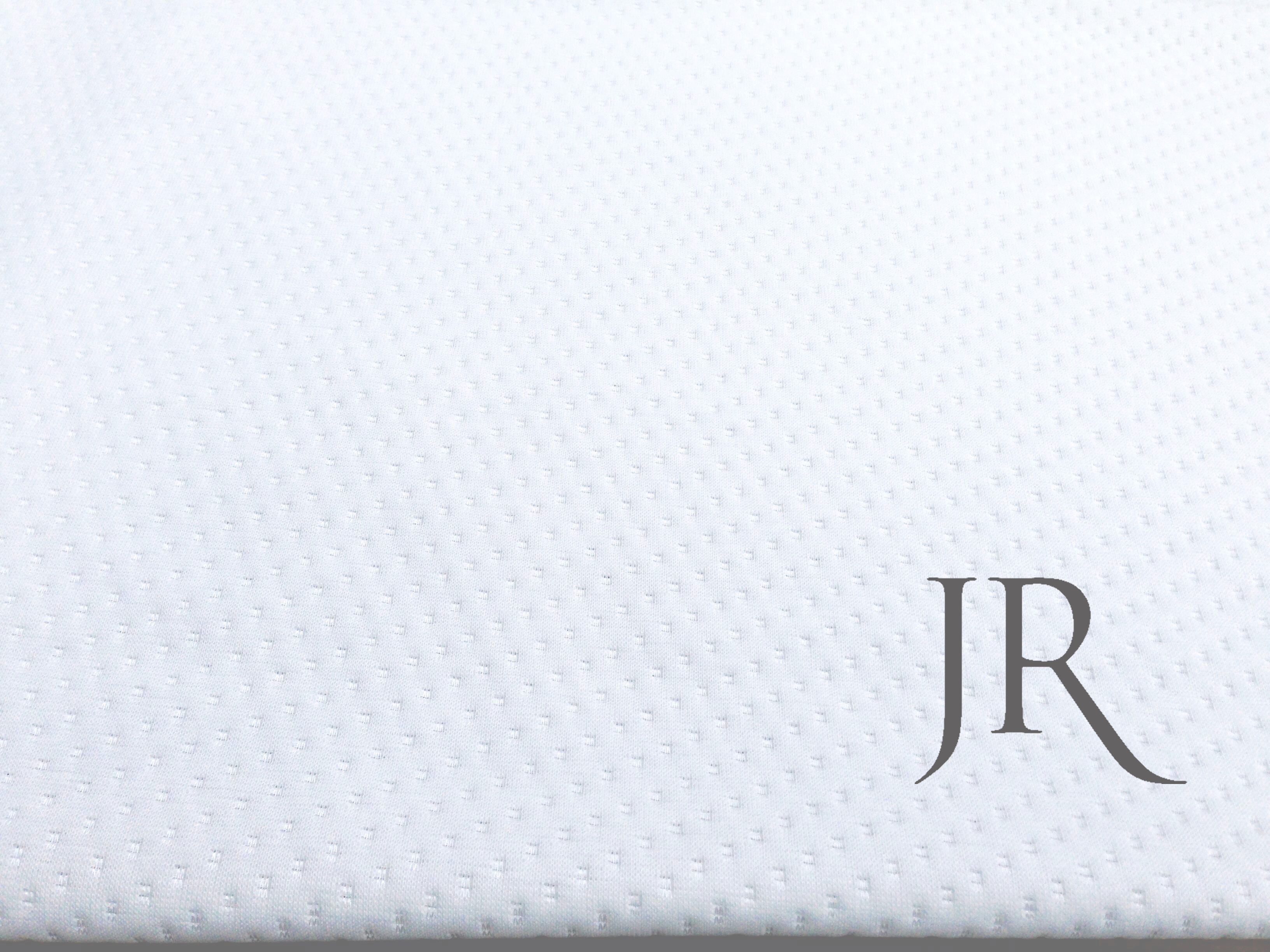
What mattress cover fabric does John Ryan Contemporary use? We have listened to your feedback and are moving to a white 400 gsm polyester knitted stretch fabric. This fabric is also quilted to provide you with a quality covering. This fabric increases comfort and prevents the material flattening as quickly as the lower GSM materials. The quilted material feels slightly padded adding to the comfort factor. We are in the process of updating our product images with this new fabric. The new white fabric is shown below.
Our recommendation: What we believe that you would be better off putting your money into other components of the mattress or high quality bed linen rather than an ineffective mattress cover.




Kath
I’m looking at a king size latex mattress option but I have a sprung base which is reasonable new and I don’t want to change it. Will these two work together or would I need a new firm base?
Also do you do any toppers with natural coverings rather than polyester e.g. bamboo?
Hi Kath, All of our mattresses will work with a sprung edge divan base. We usually advise that a sprung edge base will soften slightly the over all feel of the mattress and add a further sink sensation. If you’ve already had a sprung edge divan you will probably know the sensation I’m taking about.
We don’t currently provide natural coverings for our mattress toppers. Why is this you will no doubt ask! Well because the majority of natural coverings are not really fully natural. Take the bamboo example, we have seen mattress coverings claiming natural bamboo content when looked into with material suppliers who make similar materials, its standard that these blends of material can contain 4% actual natural fibre meaning its still either white fibre of a poly blend. Rather than mislead we currently use a high GSM polyester which we find is better value for money. 4% bamboo/cashmere/cotton really isn’t going to improve the breathability of the fabric enough to warrant the uplift in cost. We always recommend spending this money on your bedding instead, i.e. Egyptian cotton high thread count sheets.
We are however looking at improving our cover material with an optional extra of a more natural fabric, but in the true sense, at the moment this is prohibitively expensive and we still need to do further tests as to the benefits etc. Ie would you really pay £300-£500 for a kingsize merino wool blend topper cover? Which us what a high percentage 60%+ or 100% natural blend would easily cost.
Hope that helps Kath. – Lee
Carl
I’ve seen a number of Organic Latex mattress manufacturers online that use all natural materials and are made in the UK by hand. Abaca mattresses have caught my attention, why don’t you offer natural materials, it seems at odds to use polyester with a 100% natural latex mattress? Carl
Hi Carl, Quite simply if money is no object then wool. merino wool, cashmere and such are the best components. They are however incredibly expensive, especially in pure form. If you imagine how much a cashmere jumper costs then scale that up to make a bed cover. We have written many detailed posts on the trick of the trade around GSM (grams per meter) in material. A company can say ‘Cashmere cover’ and it only contains 3% Cashmere and the rest is synthetic. I’m not saying for one minute the craftsmen at Abaca do this as there mattress range is of a high quality, but just to give you some insider knowledge as to what some competitors state is pure in reality isnt. Also for this cost for some people it simply isn’t worth it, most people just want a high quality latex mattress but without expensive covers or filings that don’t add up comfort in proportion to the increased cost. ie the covers could cost nearly as much as the mattress in pure form!
We use polyester on our 100% solid core natural mattresses as its the best value and is the most resilient for its use. Its doesn’t compress nearly as much or fast as wool and allows savy customers to spend the hundreds of pounds they have saved on better high quality bedding, or simply on other things! As our line develops we will be designing a fully natural mattress but this will be a niche offering as our customers demand it.
Where we do trump the competition is the quality and blend of latex we use. We only use 100% natural latex or 80% natural Latex 20% synthetic latex, not many manufacturers will even tell you because a number don’t use any where near this quality of blends. We are open an honest about all our mattresses.
For the record and to clearly state all of John Ryan by Design and John Ryan Contemporary mattresses are made here in the UK using UK suppliers and craftmen and craftswomen! Hope that helps answer your query Carl- Lee